
Driving School Stuttgart
Enter your details to get prices and information (all non-binding)
- Book your First Aid Class in English below!
- English Theory classes
- Free Theory App in English
- Free Theory Book in English
- Free Eye Test for Driving License
- Translate your licence to German
First Aid Course Stuttgart in English
First Aid Course in English in Stuttgart city centre
Course location: Stöckachstraße 9, 70190 Stuttgart
300m from U-Bahn: Stöckach (U1/U3/U9/U14)
Free Eye Test
Free Licence Photos
Free German driving License theory book in English
Create your personal referral link
Share with your friends. Once they sign up you get €50!*
*amazon voucher
Driving License Conversion (Umschreibung)
Check below to know what rule applies to which US state.
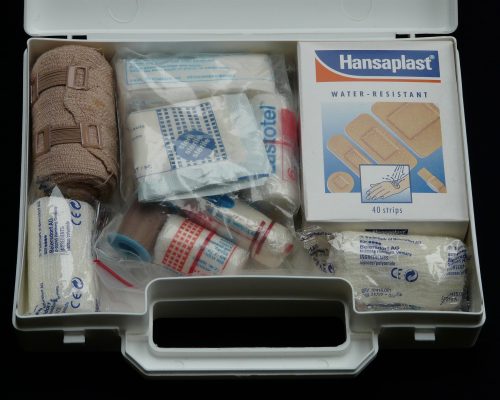

Drivers License Translation

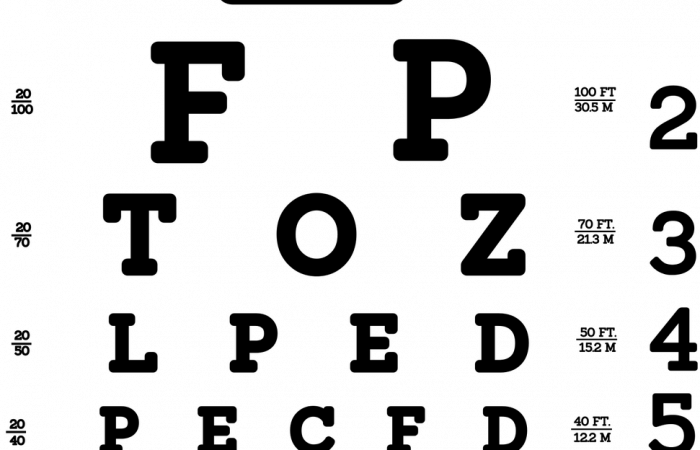
Eye Test for Driving license
The eye test for a driving license in Germany typically consists of two parts: visual acuity testing and peripheral vision testing. The visual acuity test measures the applicant’s ability to see objects clearly at various distances. The applicant is required to read letters or numbers on a chart placed at a certain distance in front of them. The chart used for the test usually follows the Snellen chart, which is a standardized chart used for measuring visual acuity.
The peripheral vision test measures the applicant’s ability to see objects located outside the central field of vision. This is important for detecting hazards while driving, such as pedestrians or other vehicles approaching from the sides. During this test, the applicant is required to identify objects located at the edges of their visual field
German Driving License Theory Book English
German driving theory
Category B · 14 chapters · 47 pages
German driving theory
Category B
14 chapters
Theory test
First licence: 30 questions (20 general, 10 Category B).
Pass: no more than 10 penalty points. Two wrong 5-point questions mean failure.
Several answers may be correct. Select every correct answer and no incorrect ones.
Practise current text, calculation, picture and video questions.
Your fitness to drive
Stop for yawning, heavy eyelids, missed signs or memory gaps. Rest. Coffee, music and open windows do not cure fatigue.
Illness, pain and medicines can impair driving. Follow medical advice and wear required glasses or contact lenses.
Set seat, head restraint, mirrors and route before moving. Do not hold or pick up a device to use it while driving.
Alcohol, drugs and medicine
| Rule / level | Meaning |
|---|---|
| Probation OR under 21 | Alcohol and cannabis ban. Alcohol learning rule: 0.0‰. |
| 0.3‰ + impairment | Alcohol-related errors or an accident can be a criminal offence. |
| 0.5‰ blood alcohol | An offence even without obvious driving errors. |
| 1.1‰ blood alcohol | Absolute unfitness to drive a car. Criminal offence. |
| 3.5 ng/ml THC in serum | General statutory threshold. Stricter novice rules apply. |
Effects may last into the next day. Prescribed medicines can also impair driving.
The human risk factor
Expect mistakes, especially from children, vulnerable users and anyone visibly behaving unsafely.
Avoid anger, competition, peer pressure and overconfidence.
Double speed: twice the reaction distance and roughly four times the braking distance.
Hidden hazards
VAN
Hidden area
A
A: view beyond the van is blocked
Behind a van or bus: hidden pedestrians. A ball may be followed by a child.
A vehicle at a junction may pull out. An indicator does not prove it will turn.
Brake lights or queues: lift off, increase the gap, prepare to brake.
Bends, crests, glare and darkness: slow before the hidden area.
The legal framework
Carry valid licence proof and registration Part I. Obey licence conditions, including required glasses.
The car needs registration, compulsory third-party insurance and its inspection when due.
The driver checks roadworthiness, passengers and load. The owner must not permit an unsafe car or unfit driver.
Probation and legal duties
First licence: normally 2 years’ probation. One qualifying A offence or 2 B offences: advanced seminar and extension to 4 years.
Violations can mean fines, points, a driving ban or licence withdrawal. At 8 points, the driving entitlement is withdrawn.
Modern licence card: normally valid 15 years. Card expiry does not itself end Category B entitlement.
Ordinary private car: first main inspection after 3 years, then every 2 years.
The road system and level crossings
Drive on the right. Outside towns, keep right unless overtaking or another rule allows a different lane.
In towns, except Autobahns, vehicles up to 3.5 t may usually choose a marked lane. Obey lane arrows.
Autobahn and Kraftfahrstraße access: vehicle and trailer must be designed for more than 60 km/h. This is not a minimum driving speed.
Joining, leaving and merging
Autobahn entry: use the acceleration lane and give way to main-road traffic. No automatic zipper priority.
Lane ends: use both lanes to the narrowing, then merge alternately.
Slow in the exit lane. Missed exit: continue to the next. No reversing, U-turns or voluntary stopping.
Use the hard shoulder only for emergencies unless signs open it as a lane.
Railway crossings
240 m
160 m
80 m
Typical countdown markers
Trains have priority at St Andrew’s cross. No overtaking from the warning sign to the crossing.
Wait for a train, warning light or sound, staff signal, or moving/closed barrier.
Proceed only when released and you can clear every track. An open barrier does not cancel a red light.
Basic rules, priority and traffic control
Priority order: police directions, working lights, priority signs, general rules.
Police directing traffic: front/back means stop, side means proceed. Raised arm: wait for the next signal.
Green: go only if clear. Yellow: stop if safe. Red or red plus yellow: stop. Never block a junction.
Right before left
A
B
Equal-ranking roads, no signs
A gives way to B on A’s right
At an uncontrolled equal-ranking junction, yield to traffic from your right. Road width does not decide.
From a driveway, dropped kerb, pedestrian zone or traffic-calmed area: yield to everyone.
A field or forest track does not give entering traffic right-before-left priority.
Turning and crossings
Left turn: yield to oncoming traffic going straight or turning right.
Any turn: protect crossing pedestrians and cyclists continuing beside you. Recheck before crossing their path.
Zebra crossing: let pedestrians and wheelchair users cross. Be ready to stop. No overtaking.
Bending priority road: the thick line shows the priority route. Signal when following its bend.
Roundabouts and green arrow plates
A
B
A waits for circulating B
Roundabout plus give-way signs: circulating traffic has priority. No entry signal. Signal on exit.
At the exit, protect pedestrians and cyclists.
Fixed green arrow beside red light: stop fully, then turn right from the right lane only without obstructing or endangering anyone.
Traffic signs and road installations
Red triangle: warning. Usually 150–250 m before the hazard outside towns, unless a plate says otherwise.
Red circle: usually restriction. Blue circle: usually compulsory instruction. Extra plates define conditions.
Give way: inverted triangle. STOP: octagon. Priority road: yellow diamond.
Essential signs
STOP
STOP
Stop fully, then yield. Move forward cautiously if visibility is blocked.
Give way
Yield. Stop if necessary.
Priority road
Priority at junctions until the rule changes.
No entry
Do not enter from this direction.
No stopping
No voluntary stop on this side.
No parking
Brief stops allowed. Loading and boarding exceptions apply.
Zones and special areas
Speed zone: applies through junctions and turns until its end sign. A normal speed limit does not automatically end at a junction.
Traffic-calmed area: walking pace. Pedestrians may use the road. Park only in marked places, except brief loading/boarding. Yield when leaving.
Bicycle street: other motor traffic needs permission. Maximum 30 km/h. Do not hinder cycling.
Pedestrian zone or bus lane: use only when signs allow it. Check time and vehicle exceptions.
Markings and lane signals
A
B
A faces the broken side
B faces the solid side
Broken line: cross if safe. Solid boundary: do not cross or straddle. Solid/broken pair: your side decides.
No driving on hatched areas. Follow lane arrows. Stop at the stop line, then cautiously gain a view if needed.
Yellow temporary markings override white. Red lane cross: closed. Green downward arrow: open.
Other road users
Near children, older people and vulnerable users: slow down and prepare to stop.
Overtaking cyclists, pedestrians or e-scooters: normally at least 1.5 m in towns, 2 m outside. Wait if space is insufficient.
Motorcycles are easy to miss. Check mirrors and blind spots before turning or changing lane.
Buses and trams
| Situation | Action |
|---|---|
| Bus approaches stop with hazards | Do not overtake. |
| Bus stopped with hazards | Walking pace. Leave space. Stop if passengers need it. |
| Oncoming beside that bus | Walking pace also applies on the same carriageway. |
| Bus signals to leave stop | Allow it to rejoin. Wait if needed. |
| Tram passengers boarding | Pass on the right only at walking pace and safely. Otherwise wait. |
Scheduled buses and marked school buses at marked stops
Large vehicles and animals
Trucks and buses: large blind spots, rear wheels cut inward, rear body swings out. Stay clear of turning vehicles.
Farm vehicles: expect low speed, wide loads, mud and hidden junctions.
Horses or loose animals: slow down, leave space, avoid startling them.
Wildlife: brake under control. Avoid swerving into traffic or trees. More animals may follow.
Speed
Car without trailer: normally 50 km/h in towns, 100 km/h on ordinary rural roads. Obey posted limits.
Unrestricted Autobahn: no general car cap, 130 km/h advisory. The rural 100 limit also has exceptions on specified divided/multi-lane roads.
Visibility below 50 m in fog, rain or snow: maximum 50 km/h, or slower if needed. Snow chains: maximum 50 km/h.
Stopping-distance formulas
Reaction distance:
(v ÷ 10) × 3
Normal braking:
(v ÷ 10)²
Emergency braking:
normal braking ÷ 2
Stopping distance:
reaction + braking
| Speed | Reaction | Normal braking | Normal total | Emergency total |
|---|---|---|---|---|
| 30 km/h | 9 m | 9 m | 18 m | 13.5 m |
| 50 km/h | 15 m | 25 m | 40 m | 27.5 m |
| 100 km/h | 30 m | 100 m | 130 m | 80 m |
v = km/h. Theory estimates. Real conditions change stopping distance. Emergency braking halves the braking part only.
Following distance
Leave enough distance to stop if the vehicle ahead brakes suddenly.
Outside towns, a common guide is half your speed in metres: 100 km/h means about 50 m. Check with a 2-second gap.
Increase the gap for poor grip, darkness, fatigue or a trailer. Leave door-opening space beside parked cars.
If tailgated, increase space ahead and let the vehicle pass safely.
Grip, curves and hills
Slow before a bend. Double speed creates roughly four times the outward force.
Wet roads, leaves, ice and worn tyres reduce grip. Avoid abrupt control inputs.
Aquaplaning: ease off, hold steering steady, avoid abrupt braking.
Descents: select a lower gear early for engine braking. Narrow road: stop within half the visible distance.
Observation and manoeuvres
Before moving off or changing lane: mirrors, signal, blind-spot check, recheck gap.
An indicator gives no priority. Never endanger other traffic when changing lane.
Scan ahead, beside and behind. Cameras and sensors supplement direct observation.
Overtaking and obstacles
Normally overtake left. Need clear visibility, enough speed difference and room to return safely.
No overtaking in unclear situations, where prohibited, at zebra crossings or across a solid boundary.
Obstacle on your side: yield to oncoming traffic unless signs give you priority.
Passing on the right has specific exceptions. A normal Autobahn lane change does not permit it. Do not accelerate when being overtaken.
Turning and reversing
Signal and position early. In a one-way street, normally use the left side for a left turn. Follow markings.
Turning: recheck cyclists, pedestrians and oncoming traffic.
Reverse slowly, watch all around, use a guide if needed. Stop if the guide disappears from view.
No manoeuvre may endanger anyone. No reversing or U-turns on Autobahns or Kraftfahrstraßen.
Stopping and parking
Red lights and queues: traffic-related waiting. A voluntary interruption is stopping.
Parking: stop over 3 minutes, or leave so you cannot move the vehicle immediately.
No stopping: no voluntary stop. No parking: up to 3 minutes, plus necessary boarding/alighting or uninterrupted loading.
Parking distances
| Place | Restriction |
|---|---|
| Junction | No parking within 5 m before AND after intersecting road edges. |
| Separate cycle track on right | No parking within 8 m BEFORE junction. Still 5 m after. |
| Zebra crossing | No stopping on it or within 5 m BEFORE. |
| Bus/tram stop sign | No parking within 15 m before or after. |
| St Andrew’s cross | No parking 5 m each side in towns, 50 m outside. |
| If your car would hide the sign/signal | No stopping within 10 m BEFORE lights, STOP, give way or St Andrew’s cross. |
Parking position and discs
Normally park right. One-way streets may allow either side. Keep driveways, dropped kerbs, cycle lanes and emergency access clear.
No stopping at narrow/blind points or sharp bends. Beside a solid centre line, parking must leave at least 3 m.
Pavement parking needs permission. Relevant sign/marking: normally maximum 2.8 t authorised mass.
Disc: next half hour (10:10 becomes 10:30). Broken meter: disc and posted maximum time.
Secure against rolling and theft. Check before opening doors. Uncoupled trailer: normally maximum 2 weeks in one place.
Behaviour in particular situations
Dipped headlights: darkness, twilight, tunnels and significantly poor daytime visibility. Parking lights or daytime running lights alone are insufficient.
Dip high beam for oncoming/nearby traffic and whenever it dazzles. High beam worsens visibility in fog.
Front fog lights: significantly poor visibility in fog, rain or snow. Rear fog light: ONLY fog below 50 m visibility. Maximum 50 km/h, or less.
Emergency vehicles and rescue corridor
Leftmost lane
Rescue corridor
Blue light plus siren: make way immediately. Blue alone warns. Amber warns without giving priority.
Autobahns and roads outside towns with 2+ lanes per direction: form a corridor at walking pace or standstill.
Leftmost lane moves left. All others move right. Leave the corridor between the two leftmost lanes.
Breakdowns, towing and tunnels
Breakdown: hazards, safe position, vest before exit. Keep people away from traffic, preferably behind a barrier.
Warning triangle: sufficient distance, about 100 m in fast traffic. Bends/hills may require more.
Breakdown towing: hazards on both vehicles. Do not enter an Autobahn. If towing starts there, take the next exit.
Tunnel queue: leave space, switch off engine while waiting. Fire: follow escape signs, leave belongings.
Accidents and first aid
Stop, secure the scene, help. Move minor collisions out of traffic if safe. Never simply leave.
Call 112: location, incident, casualties. Answer the dispatcher.
Unresponsive: check normal breathing. Breathing normally: recovery position and monitor. Otherwise: CPR and AED (defibrillator). Follow dispatcher instructions.
Exchange identity, vehicle and insurance details. A note alone is insufficient when the owner is absent.
Continuing to learn and drive safely
Build difficulty gradually, especially night driving and bad weather.
After errors or near misses, identify the cause and practise the correction.
Plan breaks and enough time. Resist pressure from passengers or other drivers.
Efficient driving
Look ahead, lift off early, avoid repeated acceleration/braking. Use a suitable high gear without labouring.
Avoid unnecessary idling, stationary warm-ups, noise and excess load. Check tyres. Remove unused roof racks.
Use engine braking on descents. Neutral removes it.
EVs can move silently. Check READY and secure before leaving. Regenerative braking varies with battery state and conditions.
Technical requirements and carrying loads
Tyres: minimum 1.6 mm main tread. Check damage and cold pressure. Low pressure increases heat and wear.
Ice, snow, slush or frost: Alpine-symbol winter tyres on all car wheels. M+S alone is insufficient.
Keep lights, windows, mirrors and plates clear. Carry triangle, at least one high-vis vest and required first-aid material.
Brakes and driver assistance
ABS prevents wheel lock. Emergency: brake hard and continuously. Manual gearbox: also depress clutch.
ESP helps stability but cannot overcome insufficient tyre grip.
Red oil-pressure, brake or overheating warning: stop safely and investigate using the manual.
Driver aids, cameras and sensors have limits. Keep observing and be ready to take control.
Passengers and child seats
Use approved seats and belts. Adjust head restraints. Keep belts correctly positioned and untwisted.
Child BOTH under 12 AND under 150 cm: suitable child restraint.
Rear-facing seat: never in front of an active passenger airbag.
No caravan passengers while towing. Secure pets.
Loads and projection
| Check | Rule |
|---|---|
| Security / weight | Secure for full braking and swerving. Respect payload, axle and roof limits. |
| Width / height | Normally maximum 2.55 m wide and 4 m high, including load. |
| Rear projection | Normally 1.5 m. Up to 3 m only for journeys up to 100 km. |
| Over 1 m behind reflectors | Approved red marker. Add required red light/reflector in poor light. |
| Front projection | None below 2.5 m height. Above that: up to 50 cm. |
Driving cars and vehicle combinations
Standard B: vehicle up to 3,500 kg maximum authorised mass (MAM), up to 8 passenger seats plus driver.
Trailer MAM up to 750 kg: allowed even above 3,500 kg combined, up to 4,250 kg.
Trailer MAM above 750 kg: combined car and trailer MAM must not exceed 3,500 kg for standard B.
Trailer entitlement
| Car MAM | Trailer MAM | Combined MAM | Entitlement |
|---|---|---|---|
| 3,500 kg | 750 kg | 4,250 kg | B |
| 2,200 kg | 1,300 kg | 3,500 kg | B |
| 2,500 kg | 1,200 kg | 3,700 kg | B96 or BE |
| 3,500 kg | 2,000 kg | 5,500 kg | BE |
B96: combined MAM up to 4,250 kg. BE: trailer MAM up to 3,500 kg. Vehicle towing, axle and coupling limits still apply.
Towing
Check locked coupling, safety/breakaway cable, electrics, lights, raised supports and secured load.
Respect towing capacity, axle loads and nose weight. Heavy items low and near the trailer axle. Check mirrors and tyre pressures.
Normally maximum 80 km/h outside towns. Approved Tempo-100 combinations: 100 only on Autobahns and Kraftfahrstraßen under their conditions.
Allow more space and wider turns. Reverse slowly. If swaying: ease off and brake carefully to reduce speed. No sharp steering.
Key numbers
| Number | Meaning |
|---|---|
| 50 / 100 / advisory 130 km/h | Car without trailer: town / ordinary rural road / unrestricted Autobahn. |
| Under 50 m visibility | Fog, rain or snow: maximum 50 km/h. |
| 1.5 m / 2 m | Cyclist overtaking gap: town / outside town. |
| 5 m / 8 m / 15 m | Junction / before junction with right cycle track / bus-stop sign. |
| 1.6 mm / under 12 AND under 150 cm | Minimum tyre tread / child-restraint test (both thresholds). |
| 750 kg / 3,500 kg | B trailer threshold / combined MAM cap above that threshold. |
Question routine
Read must, may, not, before, after, AND and OR carefully.
Identify road type, signs, priority, other users and hidden hazards.
Test each answer independently. Check calculation units and whether reaction distance is included.
Practise every current question and media variant. Correct errors, then take varied mock tests.
No matching pages. Try another search.
Using a foreign driving licence in Germany
Countries with an agreement with Germany for the exchange of driver's licenses
Countries with driving license swap
| Albania |
| Andorra |
| Australia |
| Bosnien & Herzegowina |
| Canada |
| Faroe Islands |
| Gibraltar |
| Guernsey |
| Isle of Man |
| Israel |
| Japan |
| Jersey |
| Kosovo |
| Moldova |
| Monaco |
| Namiba |
| New Zealand |
| San Marino |
| Serbia |
| Singapore |
| South Africa |
| South Korea |
| Switzerland |
| United Kingdom |
| USA (See individual state) |
Driver's License Information for US Citizens in Germany
No Test
| Alabama |
| Arizona |
| Arkansas |
| Colorado |
| Delaware |
| Idaho |
| Illinois |
| Iowa |
| Kansas |
| Kentucky |
| Lousiana |
| Maryland |
| Massachussetts |
| Michigan |
| New Mexico |
| Ohio |
| Oklahoma |
| Pennsylvania |
| South Carolina |
| South Dakota |
| Texas |
| Utah |
| Virginia |
| Washington State |
| West Virginia |
| Wisconsin |
| Wyoming |
| Puerto Rico |
Theory Test
| Connecticut |
| Florida |
| Indiana |
| Minnesota |
| Missouri |
| Nebraska |
| North Carolina |
| Oregon |
| Tennessee |
| Washington DC |
Theory Test & Driving Test
| Alaska |
| American Samoa |
| California |
| Georgia |
| Guam |
| Hawaii |
| Maine |
| Montana |
| Nevada |
| New Hampshire |
| New Jersey |
| New York |
| North Dakota |
| Rhode Island |
| US Virgin Islands |
| Vermont |

Gather your documents for exchanging your foreign driving license
Register with Driving School
Application form (from local driving licence authority) stamped by the driving school
First Aid Course certificate (book your first aid course here)
Biometric photo 35mm x 45mm
Eye test certificate
Foreign Driver’s Licence
Passport
Application fee (usually around €40-60)
Meldebestätigung: Your first registeration in Germany (including date of entry and country of origin, obtain this from the Ausländerbehörde.
All the required documents need to be taken to the local driving licensing office.
German Driving Licence
For driving any vehicle, driving licence is mandatory in Germany. The rules for getting a German driving license vary where you come from. It’s tricky for expats to get German driving license. If you have your own driving licence, you can drive any vehicle legally in Germany with your existing licence for atleast six months after residing in Germany. German driving licence application usually takes times between four to six weeks to process and you need to get admission in English Speaking Driving School before taking a test.
Introduction To Getting a German Driving Licence
German licence is just equivalent to a license from a non-EU member state. If you have a grant from a non-EU part state, you need to consider how long you are going to stay in Germany.
- You can use your foreign license, if you stay for fewer than six months.
- You need to get an extension for your international permit from the local Driver’s License Department after six months, if you stay in Germany for six to twelve months.
- You need German driving license, if you stay for longer than twelve months.

B Class Driving License
The B class driving license allows individuals to operate passenger cars and small trucks with a maximum weight of 3.5 tonnes. Here are the main limits of a B class driving license in Germany:
Maximum Weight Limit: 3.5 tonnes.
Maximum Number of Passengers: 8 passengers, plus the driver (8+1 rule).
Maximum Towing Limits: 750 kg. BE or B96 is needed to tow more.
Maximum Speed Limits: Autobahns typically 130 km/h (if not unlimited) and on urban roads 50 km/h.
Minimum Age Requirement: 18 years old. (Not including Begleitetes Fahren ab 17 BF17 )

Licence Exchanges
If you applying or need a German driving licence, find out whether you have to clear a written exam or English theory exam and practical road test or need to clear any one of these exams or not at all. The requirements for applying a German driving licence, completely depends on your country of origin.
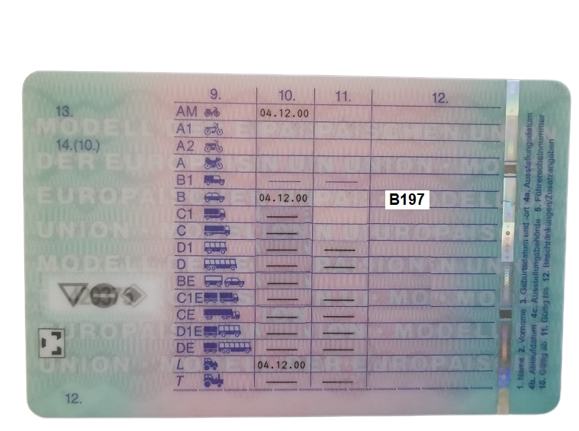
B197 Driving License
The B197 Driving License program combines driver training in an automatic car with additional manual training, so even if you take a driving test in an automatic car, you can drive a manual car without restrictions.
Further Requirements
The cost of applying for a German driver’s license can be high due to the numerous necessary classes that applicants must attend. You might ask your instructor if he or she can give any specialized sessions or English driving lessons for experienced drivers if you already drive but need practice for the theoretical exam. Moreover, there are certain additional requirements for licenses for young drivers, truck, bus, or motorbike drivers.
Once you become able to exchange your old permit for a German driving license, you need some important following documents.
- An official translation of your foreign driving permit
- An application form for a German driving vehicle license
- A passport or any ID card (and two photos)
- Your German residence permit
- A statement you received from your driving instructor that you passed the theoretical exam or the road test.
- Proof that you have already taken a first-aid class recently
- Proof that you have passed a medical vision test
Basically, German driving licences are valid for 15 years from the date of issue. To need to make appointment at your driving licence for renewing the licence. It is hard to renew a foreign driving licence in Germany. If you are an expat having foreign driving licence that is about to expire, you need to apply for German one.
Checklist for getting German Driving Licence
- Driving Licence Application form (from the School)
- First Aid class certifcate
- Biometric photo 35mm x 45mm
- Eyesight test results
- Translation of your licence to German
- Original Driving Licence
- Passport
€68,50 processing fee - Meldebestätigung: Your first registeration in Germany (including date of entry and country of origin, obtain this from the Ausländerbehörde
Driving School Classes in English

Beginners
Those you dont have licence from abroad have a legal requirement to take the 12 (45min) compulsory driving lessons and 14 (90 min) theory lessons
12 Compulsory driving lessons
B Roads / Country Roads
- 5 x 45min classes
Motorway (Autobahn)
- 4 x 45min classes
Darkness (nighttime)
- 3 x 45min classes
14 Theory Classes in English
- Physical abilities
- Limitations of physical abilities
- Alcohol
- Illegal drugs and medication
- Emotions
- Self-image; driving ideals and driving roles
- Driving motor vehicles, driving license
- Registration of vehicles, vehicle documents
- Vehicle inspections
- Insurances, loss of insurance coverage
Traffic signs and traffic facilities
- Basic rule § 1 (StVO)
- Traffic signs
- Danger sign
- Regulatory sign
- Directional sign
- Traffic facilities
- Symbols
Road transport system and its use
- Traffic routes and their meaning
- Road markings
- Road use
Right of way
- Definition
- Left turn / priority of oncoming traffic
- Right before left
- Traffic signs regulating the right of way
- Turning right of way
- Traffic circle
Traffic regulations/ Railroad crossings
- Traffic control by traffic lights
- Green arrow sign
- Permanent light sign
- Traffic regulation by police officers
- Interconnections right of way / traffic regulations
- Special traffic situations
- Railroad crossings
Speed, distance and environmentally friendly driving
- Speed – Meaning
- Choice of speed
- Speed regulations
- Stopping distance
- Safety distances
- Environmentally conscious driving at intersections and junctions
Other participants in road traffic: characteristics and behavior
- Road users – overview
- Public transport
- Passenger cars
- Motorcycles
- Large and heavy vehicles
- Cyclists
- Pedestrians
- Children
- Elderly and disabled people
- Traffic calming measures
Traffic behavior
- during driving maneuvers, traffic observation
- Driving in, starting
- Side-by-side driving
- Passing
- Overtaking
- Turning
- Reversing
- Turning
- Swerving
Stationary traffic
- Stopping and parking
- Stopping bans
- Parking bans
- Parking time monitoring devices
- Getting in and out
Behavior in special situations
- Lighting
- Tunnel
- Behavior towards special vehicles
- Behavior after a traffic accident
- Towing, towing and towing to a vehicle
- Warning signs
Lifelong learning / Consequences of violations against traffic regulations
- Numbers, data, facts
- Older drivers
- Middle-aged drivers
- Novice and young drivers
- Young drivers – measures taken by the legislator
- Punishment of misconduct
Technical conditions environmentally conscious handling with motor vehicles
- operational safety
- Road safety
- Other vehicle technology
- Electronic aids
- Driving physics
- Use of the brakes
- Environmentally friendly handling of the motor vehicle / traffic bans
Driving with solo vehicles and trains, passenger and freight transportation
- Assembling trains
- Connecting and disconnecting
- Driving with trains
- Passenger transport
- Freight transport
- Vehicle dimensions
- Social regulations
FAQ Getting a German Driving Licence
You can take your driving test in an automated car under the B197 program, which went into effect in April 2021, and you can also become qualified to drive a manual car by doing an additional 10 manual driving courses.
B197 expedites pupils’ driving test success (easier to pass in an automatic vehicle). By passing the B197 exam, you can drive a manual car anywhere in the world without any restrictions.
No, the German driving exam cannot be taken in English. The theoretical test is available in the following languages: English, French, Greek, Italian, Croatian, Polish, Portuguese, Romanian, Russian, Spanish, or Turkish. Many languages are also offered for theory sessions.
Manual cars are more common in Gemany, however most luxury vehicles and many new vehicles are available as automatic,
Driving a car with a weight limit of up to 3,500 kilograms and/or a seating capacity of up to eight people is permitted in Germany with the Class B license. The “8+1 rule” refers to a total of 9 seats, including the driver.
The automatic driver’s license belongs to BA. A person may only operate an automated vehicle after passing their practical driving test in one. The B197 program now permits students to take the driving test in an automatic and then qualify to drive an automatic after taking an additional 10 manual driving lessons.
In Germany, you are able to take your driving test in an automated vehicle. You can drive a manual automobile with the B197 if you pass the test in an automatic vehicle.
The number of attempts at the test is unrestricted. Only the test cost has to be paid each time.
Drivers with Class B licenses are permitted to operate vehicles up to 3.5 metric tons (3500 kg) in weight, including automobiles and/or lorries. You need to have a BE driving license if you intend to tow trailers weighing more than 750 kg. Moreover, additional driving instruction and a unique test are needed for this.
Depending on the license type you are seeking for, a road test in Germany normally lasts between 30 and 75 minutes. After passing your theoretical test, you have a full year to take your practical test. As your teacher rides along in the passenger seat, your examiner, who will be testing your driving skills, will be in the backseat.
Germany charges €116.93 for the practical test at the testing facility and €22.49 for the theory test. If you don’t pass a test, you have to pay the exam cost again.
Your license can be obtained in 4 to 12 months. Individuals without a license from another country must do 14 90-minute theoretical lessons.
Yes, you may take the driving theory exam in any of these languages, in addition to German: English, French, Greek, Italian, Croatian, Polish, Portuguese, Romanian, Russian, Spanish, Turkish, and of course, German.
Driving School Stuttgart
Get your German driver’s license