
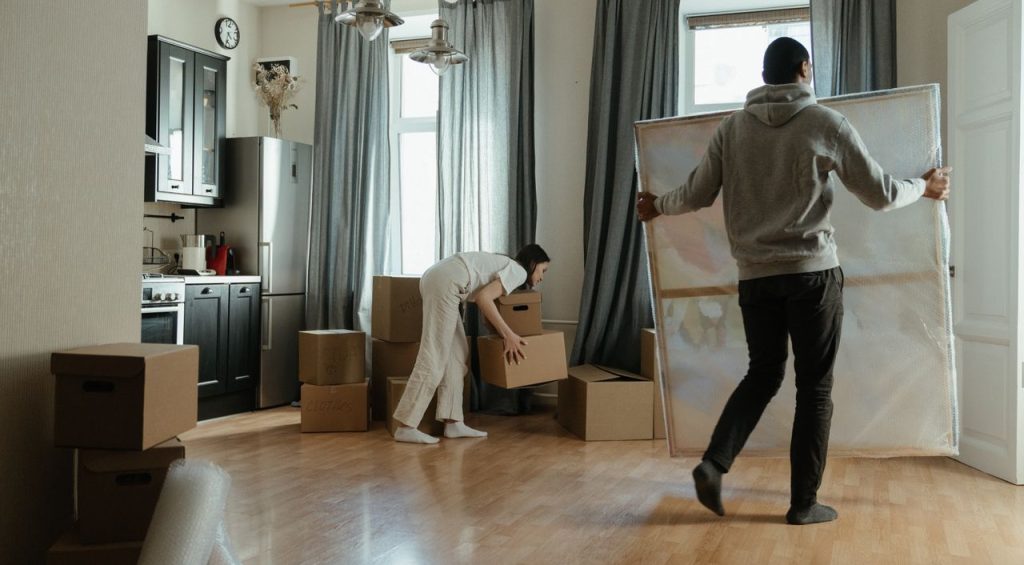
If you have just landed in Stuttgart, or are packing your life into boxes preparing to make the jump, welcome. You are in for steep vineyard hikes, great local wine, and a surprisingly green pocket of southern Germany.
You are also likely in for one of the universal rites of passage every expat faces here: the local housing hunt.
Unless your employer booked you into a turnkey serviced apartment for six months, you will likely spend your first weeks in a temporary sublet (Zwischenmiete) or an Airbnb while tracking down a permanent lease. And here is where things get tricky: German flats are often handed over completely empty (sometimes literally stripped down to the light fittings and floorboards, without a fitted kitchen), or your shipping container arrives three weeks before your lease start date.
Add to that the fact that historic Altbau buildings in popular neighborhoods like Stuttgart-West or Süd come with narrow stairwells and tiny, musty basement cubbies (Keller), and you suddenly find yourself asking: Where on earth do I put all this stuff in the meantime?
Here is a practical, grounded guide to figuring out personal storage in and around Stuttgart so you do not overpay or get stuck hauling furniture up five flights of stairs twice.
The Two Storage Routes
Depending on whether you have a car, how long you need storage, and whether you want to lift heavy boxes yourself, you generally have two distinct setups:
1. Traditional Walk-In Self-Storage
This is the standard model: you rent a private, locked unit inside a multi-story warehouse facility and hold the key (or digital PIN).
- When it makes sense: You need recurring, hands-on access. If your winter wardrobe, sports gear, camping kit, or important paperwork are in those boxes and you want to be able to drop by on a Tuesday evening to grab an extra jacket, classic self-storage is what you want.
- The logistical reality: Stuttgart’s valley geography (Kessellage) means traffic along major arteries like the B14 and B27 can back up quickly. If you rent a unit across the city, make sure it is near a reliable U-Bahn stop or accessible when you have a weekend car-share booked.
2. On-Demand Storage (Pick-Up & Delivery)
Also known as full-service or valet storage, this setup has become a lifesaver for arriving expats. You pack your belongings, and a team brings a van to your temporary flat, carries the boxes down, loads them up, and trucks them to a secure logistics facility outside the dense city perimeter. When you sign a permanent lease, you schedule a return delivery right to your new address.
- When it makes sense: You are storing entire rooms of furniture, large wardrobes, or sealed boxes that you do not need to touch until move-in day.
- The logistical reality: It completely eliminates the headache of renting a 3.5-ton van, wrestling it through tight residential one-way streets, and finding a legal parking spot without getting ticketed.
What Does Space Actually Cost?
One thing that catches many newcomers off guard is the pricing structure. In Germany, storage facilities calculate rent in varying cadences: some bill on a strict monthly basis, while others quote prices every 4 weeks. (A 4-week cycle means 13 billing periods a year, which quietly adds an extra month’s cost over a full year).
Across the greater Stuttgart region, there are currently 18 dedicated storage facilities offering over 350 distinct unit configurations. Pricing varies widely based on whether the site is in an inner-city commercial zone or out in an industrial satellite.
To help you budget realistically, here is an objective benchmark of current monthly market rates:
| Space Category | Floor Area | Starting From | Typical City Average | What Actually Fits |
| Locker / Micro-Unit | 0 – 2 m² | ~€20 / month | ~€73 / month | 8–15 moving boxes, suitcases, winter coats, documents |
| Small Unit | 2 – 5 m² | ~€32 / month | ~€144 / month | Studio flat contents, dismantled bed frame, bike, boxes |
| Medium Unit | 5 – 10 m² | ~€45 / month | ~€247 / month | Typical 1-to-2 bedroom flat furniture, mattress, dining set |
| Large Unit | 10+ m² | ~€76 / month | ~€483 / month | Multi-room household or family relocation inventory |
(Rates aggregated across verified regional facilities via The Storage Scanner platform, October 2026).
The Geography Trick: Saving Money Outside the Basin
Stuttgart sits in an unusual topography, a natural basin ringed by steep hills. Because land inside the city core is at an absolute premium, facilities in central postcodes naturally charge more per square meter.
If you don’t need daily access to your boxes, looking just 10 to 20 kilometers along the regional transit routes can dramatically change your bottom line:
- Heading North toward Ludwigsburg: Average storage rates out toward Ludwigsburg drop significantly, often up to 40% cheaper on average compared to central Stuttgart facilities. If you are putting household goods away for 3 to 6 months while searching for an apartment, the savings easily justify the short drive.
- Heading East into the Rems Valley (e.g., Waiblingen): Prices here trend roughly 15% to 16% lower than inner-city options.
- A Word of Caution on the Southwest: You might assume going south toward places like Sindelfingen or Böblingen would also be cheaper, but regional data shows rates there are actually 10% to 15% higher on average, largely due to high industrial and corporate demand around major tech and automotive campuses.
Three Costly Mistakes Expats Make
1. Renting by Square Meters Instead of Cubic Volume
German storage units typically have high ceilings (often 2.5 to 3 meters). Most people overestimate how much square meterage (m²) they need by laying everything out flat in their head. If you use uniform, heavy-duty moving boxes and stack them vertically, a 3 m² unit easily holds what many assume requires 6 m². Don’t pay for empty air.
2. Overlooking Insurance Overlaps
Reputable storage facilities in Germany will require you to hold contents insurance for stored goods. Before you accept the facility’s standard add-on insurance fee (which can add €10 to €25 to your monthly bill), check your German household contents policy (Hausratversicherung). Many standard German policies include an “external storage clause” (Außenversicherung) that covers your personal belongings off-site for up to 3 to 6 months at no extra charge.
4. Booking Without Industry Certification
Look for facilities that carry accreditation from the Self Storage Association (or the German branch, Verband deutscher Self Storage Unternehmen). This guarantees standard environmental controls: units are genuinely climate-regulated, dry, and clean, meaning your wooden tables, mattresses, and clothes won’t come out smelling like damp cellar humidity three months down the road.
Take Your Time to Compare
Moving countries or cities is stressful enough without overpaying for an empty room. Before you sign any rental agreement, take twenty minutes to benchmark quotes side-by-side.
Using an independent aggregator like The Storage Scanner lets you filter transparently across walk-in facilities and full-service pick-up options in Stuttgart, normalize differing billing cycles, and identify spaces that save you up to 65% per month, money much better spent settling into your new neighborhood.